
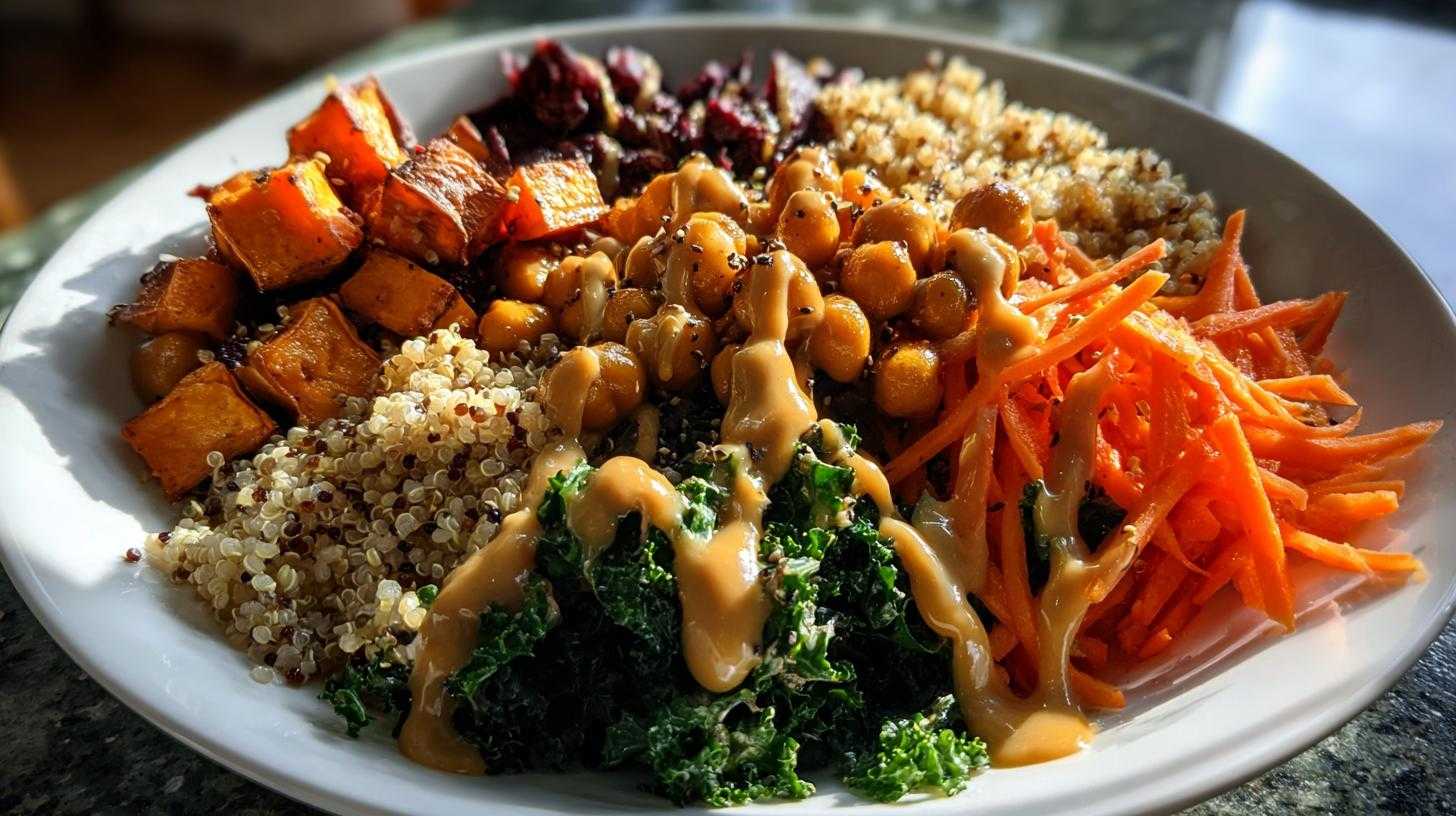
Introducing Your New Healthy New Year Lunch: The Winter Buddha Bowl with Maple Dijon
Are you ready to reset your eating habits? We all want a healthy start to the New Year. Forget restrictive diets. I want you to feel nourished, not deprived. That is why I love this Winter Buddha Bowl with Maple Dijon so much.
It’s warm, deeply satisfying, and packed with goodness. Liam used to measure everything perfectly. Now, his precision helps make sure this bowl comes out amazing every time. But the feeling is pure joy, not stress.
This bowl proves healthy eating can taste incredible. It’s my favorite way to eat clean right now. It truly feels like comfort in a bowl.
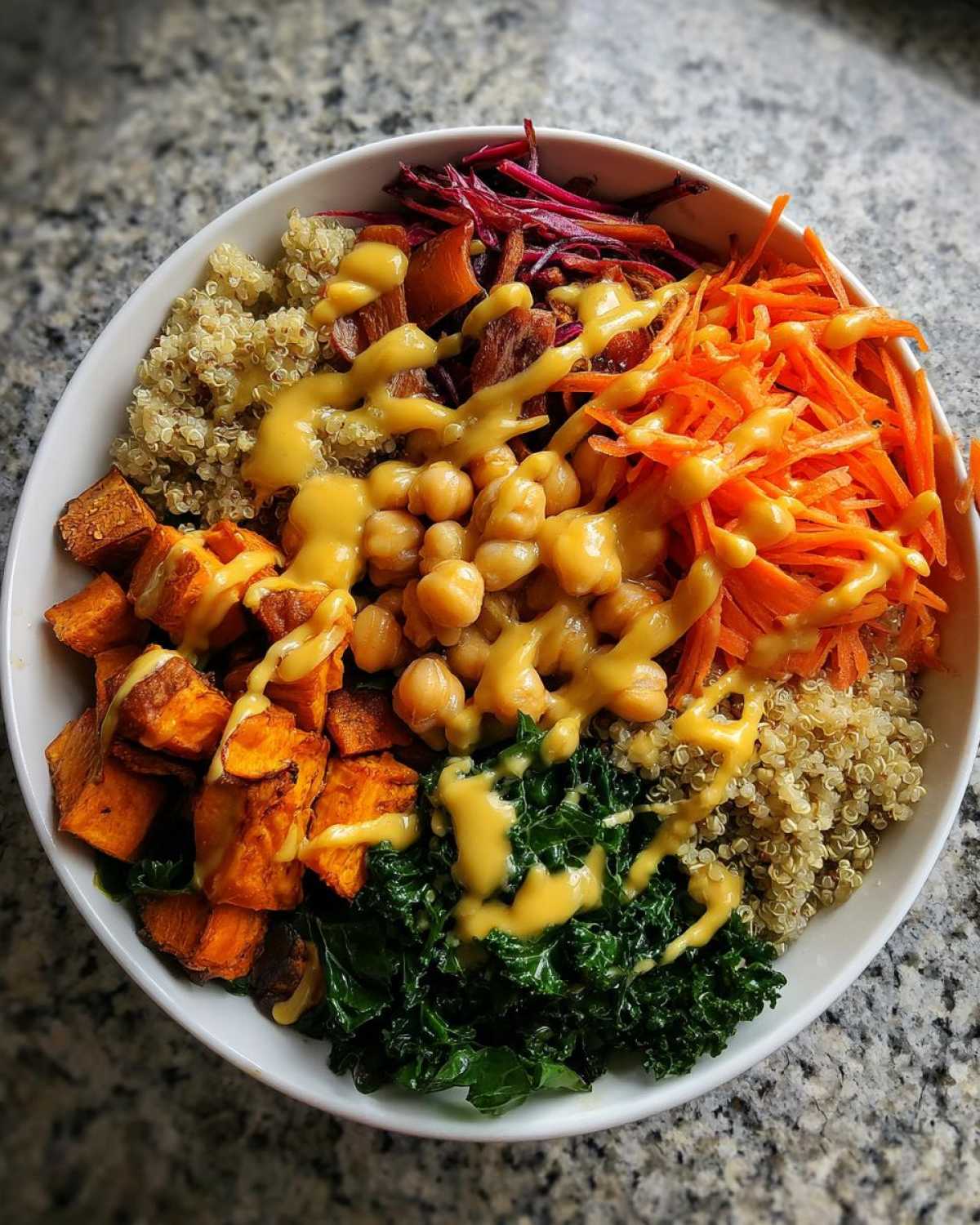
Why You’ll Love This Winter Buddha Bowl with Maple Dijon
This recipe is truly kitchen magic. It checks every box for a perfect midday meal.
Here’s why this bowl keeps landing on our weekly menu:
- It’s super quick to pull together.
- It’s loaded with fiber and great nutrients.
- The dressing adds a necessary bright kick.
- Components store well for easy meal prep.
It’s clean eating without feeling boring at all. You’ll feel good eating it.
Equipment Needed for Your Winter Buddha Bowl with Maple Dijon
Don’t let a lack of fancy gear stop you. We keep things simple here at Child Recipe. You don’t need a dedicated food processor. Good tools make cooking easier, though. Liam always says preparation matters.
Gather these few items before you start cooking. It keeps the process flowing smoothly.
Essential Tools
- A sturdy baking sheet for roasting.
- One small jar with a tight-fitting lid. This is for shaking the dressing.
- A large mixing bowl for tossing veggies.
- A small bowl for mixing up your grains.
- Measuring cups and spoons, of course!
Having these ready means less searching later. It keeps the kitchen stage set!
Assembling the Perfect Winter Buddha Bowl with Maple Dijon Ingredients
Time to gather our beautiful components! This is where the real fun starts. Liam always lays everything out first. It looks like a colorful painting before we even assemble it. We need three main groups of ingredients.
Focus on having your quinoa cooked and your sweet potatoes already roasted. That prep makes assembly fast. This recipe makes two generous servings, perfect for me and Liam.
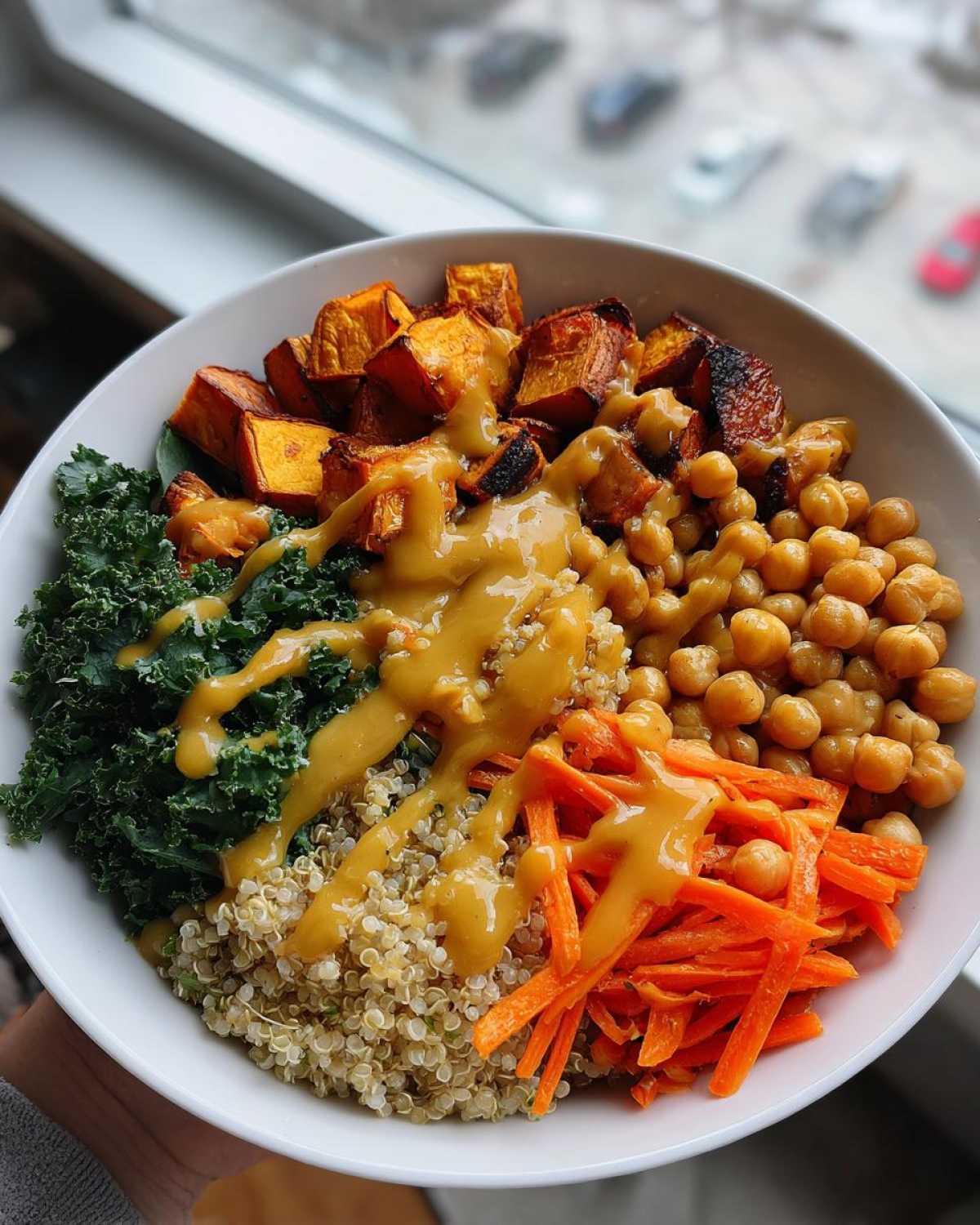
For the Bowl Base and Components
- 1 cup cooked quinoa or brown rice (your base)
- 1 cup roasted sweet potato cubes (warm element)
- 1 cup chopped kale or spinach (your greens)
- 1/2 cup cooked chickpeas (protein boost)
- 1/4 cup shredded carrots (for crunch)
- 2 tablespoons pumpkin seeds (the perfect topping)
Crafting the Maple Dijon Dressing
This dressing is the star, honestly. It brings the whole Winter Buddha Bowl with Maple Dijon together.
- 3 tablespoons Dijon mustard (use a good quality one!)
- 2 tablespoons pure maple syrup
- 1 tablespoon apple cider vinegar
- 2 tablespoons olive oil (extra virgin is best)
- 1 tablespoon water (add more if you like it thinner)
- Pinch of salt and pepper for seasoning
Get all these dressing ingredients ready to go. A small jar makes shaking so easy, trust me.
Step-by-Step Instructions for Your Winter Buddha Bowl with Maple Dijon
Okay, now for the action! We break this down simply. Follow these steps for a perfect bowl every time. Liam always insists on prepping components first. This keeps things calm in the kitchen.
Preparing the Grain and Roasting Vegetables
First things first, get your grains going. Cook your quinoa or brown rice per the package directions. I usually start this first.
While that simmers, let’s roast those sweet potatoes. Preheat your oven to 400 degrees F (200 C). Toss the cubes with a little oil. Add salt and pepper to taste. Spread them on your baking sheet. Roast them until they are tender when poked. That takes about 20 to 25 minutes usually.
They should be slightly caramelized at the edges. That sweetness really shines through later.
Making the Signature Maple Dijon Dressing
This dressing is liquid gold, seriously. Grab your small jar with the lid. Toss in the Dijon mustard and maple syrup first. Add the vinegar, olive oil, salt, and pepper.
Put the lid on tight. Shake it hard! You want everything to emulsify nicely. It should look creamy, not separated. If it seems too thick, add that tablespoon of water. I often make this dressing the day before. It holds up beautifully in the fridge for a week.
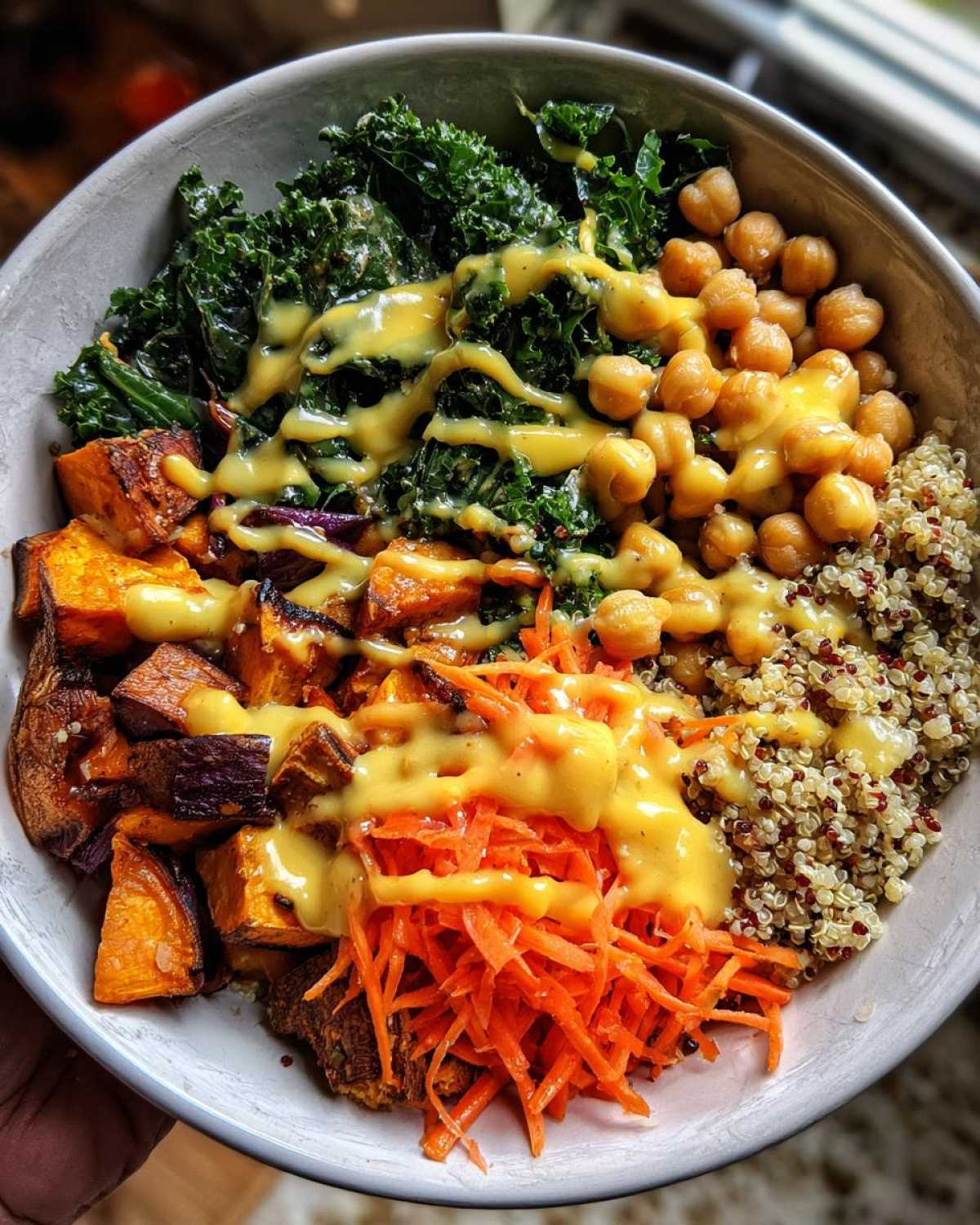
Assembling Your Winter Buddha Bowl with Maple Dijon
Time to build! Grab your serving bowls. Spoon the cooked grain into the bottom first. This forms a nice, warm foundation. Next, layer on the warm roasted sweet potatoes.
Now, add the fresh components. Pile on the chopped kale or spinach. Place the cooked chickpeas next to the greens. Sprinkle the shredded carrots over everything. Finally, scatter those crunchy pumpkin seeds right on top.
Don’t forget the best part! Drizzle that beautiful Maple Dijon dressing liberally over the entire Winter Buddha Bowl with Maple Dijon. Eat it right away for the best texture experience!
Tips for Success with Your Winter Buddha Bowl with Maple Dijon
Getting this bowl right is about balancing textures. Liam focuses on that perfect roast. I focus on adding fun extras. A great Buddha bowl sings with variety.
Follow these few pointers for your best result. It keeps the eating exciting and fun.
- Roast your sweet potatoes until they just start to brown. That caramelization is key.
- Taste your dressing before you pour it on. Adjust the maple or vinegar if needed.
- Keep your greens fresh. Add them last so they don’t wilt too much.
- Always serve this immediately after dressing. Soggy greens are a tragedy!
Ingredient Swaps and Additions
Don’t feel stuck to the list. That’s the beauty of improvisation! If you have Brussels sprouts, roast them alongside the sweet potatoes. Butternut squash works wonderfully too. These hearty roasted vegetables hold up well. If you are looking for other hearty grain options, check out this recipe for Lebanese Mujara Lentils and Rice.
Need more staying power for lunch? I sometimes boil an egg while the potatoes roast. A perfectly jammy egg is amazing here. Grilled chicken breast is a simple protein swap. Remember, this recipe is just a starting point for your own culinary show.
Frequently Asked Questions About Making a Healthy New Year Lunch
We get so many great questions about this recipe. Cooking should feel easy, not confusing. Let’s clear up a few things about your Winter Buddha Bowl with Maple Dijon.
These bowls are perfect for busy weeknights too. They really fit into any busy schedule.
Can I make the Maple Dijon Dressing ahead of time?
Yes, absolutely! I strongly suggest making the dressing early. Store it in that sealed jar. It keeps well in the refrigerator for about one week. Just give it a good shake before drizzling.
What makes this a good Healthy New Year Lunch option?
It’s fantastic for clean eating goals. The bowl is naturally vegetarian. It is high in fiber from the quinoa and chickpeas. You get lots of good vitamins from the kale and carrots. It fuels you without weighing you down. For more ideas on clean eating goals, you might find information on general nutrition guidelines helpful, such as those provided by the World Health Organization.
Can I use a different grain instead of quinoa?
Of course! Quinoa is just one option. Brown rice works perfectly fine here. Farro adds a great chewy texture if you have it on hand. Any whole grain base works well for this hearty lunch.
Storing and Reheating Your Winter Buddha Bowl Components
Planning ahead saves so much stress later. We love making components for these bowls early. Storing them right keeps everything tasting fresh. This is key for busy days.
Never store the dressing on the assembled bowl. The greens will get soggy fast. That ruins the crunch we worked for! Keep the dressing separate in its jar. It stays good for seven days.
How about reheating? The grains and chickpeas are fine warm. Store them together in one container. Reheat them gently in the microwave for about a minute. Keep the kale and carrots cold. Add them right before you serve.
The roasted sweet potatoes reheat beautifully too. They keep their shape well. Just reheat those warm pieces separately. Then, build your chilled components around them. This keeps every texture perfect.
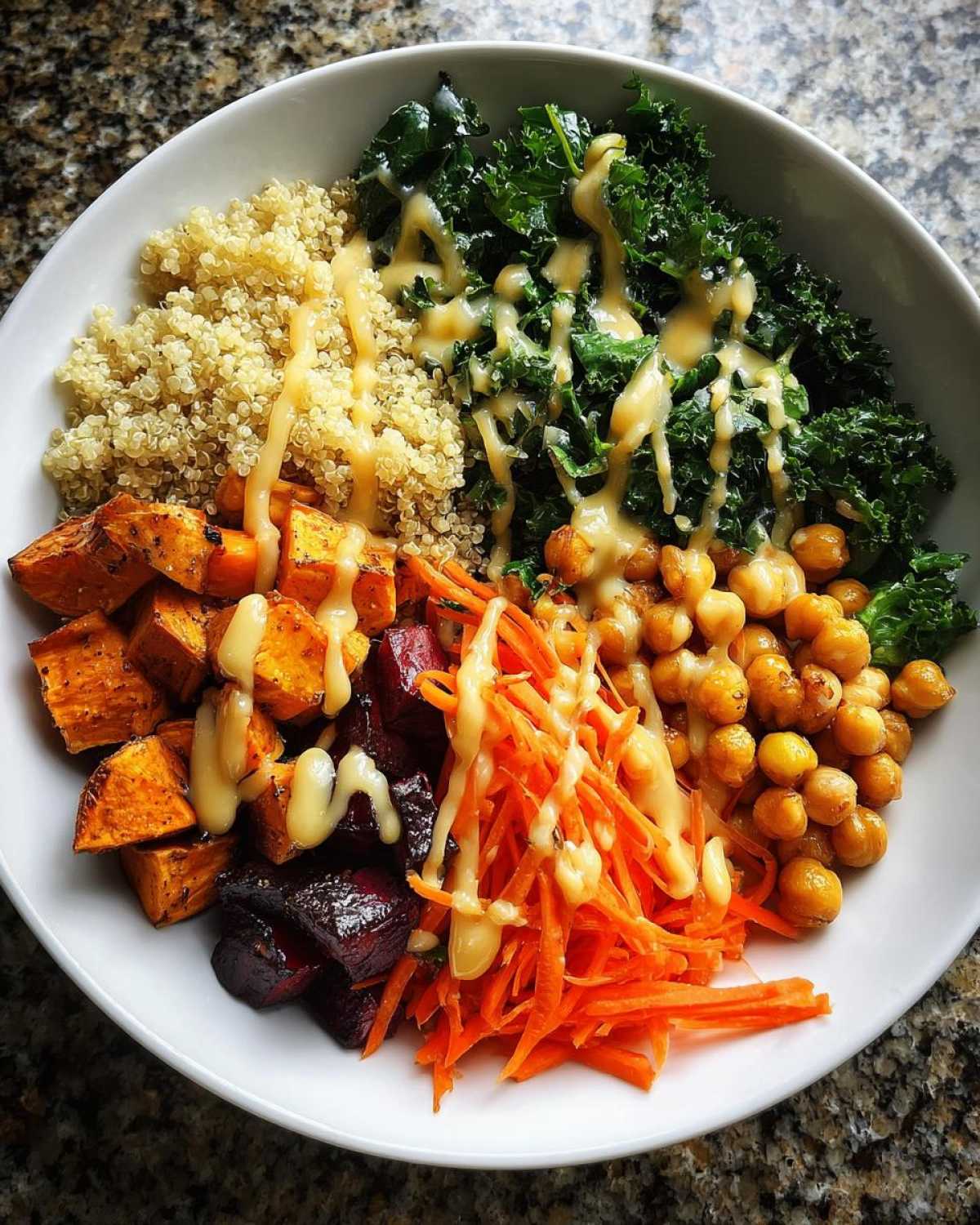
Estimated Nutritional Profile for the Winter Buddha Bowl with Maple Dijon
Let’s talk numbers for a moment. Knowing what’s in your food helps you plan better. This Winter Buddha Bowl with Maple Dijon is designed to be filling. It balances complex carbs with healthy fats.
Liam calculated these figures carefully. Remember, these are just estimates. Your exact amounts will change things slightly. We aim for satisfaction and nourishment.
Here is a general breakdown per serving:
- Calories: Estimate 450
- Total Fat: Estimate 18g
- Protein: Estimate 15g
- Carbohydrates: Estimate 60g
- Dietary Fiber: Estimate 10g
That fiber content is fantastic for feeling full all afternoon. It keeps your energy steady. Enjoying this healthy lunch feels like a real win. If you are interested in high-fiber meals, you might enjoy our High Protein Quinoa Chickpea Feta Salad.
Please remember these counts are based on the standard recipe amounts. Ingredient brands can vary slightly, of course. This gives you a solid guide for your clean eating journey.
Share Your Culinary Performance
So, how did your show go? Did you nail the roast? I want to hear about your twists!
Did you add spicy radish or maybe some toasted pecans? Rate this Winter Buddha Bowl with Maple Dijon below.
Tell us how you improvised today. Let your inner child play in the kitchen!
Print
Amazing Winter Buddha Bowl with Maple Dijon Flavor
- Total Time: 40 minutes
- Yield: 2 servings 1x
- Diet: Vegetarian
Description
Start your New Year with a warm, satisfying, and healthy Winter Buddha Bowl featuring the bright flavor of Maple Dijon dressing. This bowl brings comfort and nutrition together for a perfect healthy lunch.
Ingredients
- 1 cup cooked quinoa or brown rice
- 1 cup roasted sweet potato cubes
- 1 cup chopped kale or spinach
- 1/2 cup cooked chickpeas
- 1/4 cup shredded carrots
- 2 tablespoons pumpkin seeds
- For Maple Dijon Dressing:
- 3 tablespoons Dijon mustard
- 2 tablespoons maple syrup
- 1 tablespoon apple cider vinegar
- 2 tablespoons olive oil
- 1 tablespoon water (or more for desired consistency)
- Pinch of salt and pepper
Instructions
- Prepare your grains according to package directions.
- Toss sweet potatoes with a little oil, salt, and pepper. Roast at 400 degrees F (200 C) until tender.
- Combine all Maple Dijon Dressing ingredients in a small jar. Shake well until fully mixed.
- Assemble your bowl: place the grains in the base.
- Layer the roasted sweet potatoes, kale, and chickpeas over the grains.
- Top with shredded carrots and pumpkin seeds.
- Drizzle generously with the Maple Dijon Dressing just before serving.
- Enjoy your nourishing bowl!
Notes
- Feel free to swap roasted vegetables based on what you have available. Brussels sprouts or roasted butternut squash work well.
- For extra protein, add a hard-boiled egg or grilled chicken breast.
- Make the dressing ahead of time and store it in the refrigerator for up to a week.
- Prep Time: 15 minutes
- Cook Time: 25 minutes
- Category: Lunch
- Method: Assembly/Roasting
- Cuisine: American
Nutrition
- Serving Size: 1 bowl
- Calories: Estimate 450
- Sugar: Estimate 12g
- Sodium: Estimate 400mg
- Fat: Estimate 18g
- Saturated Fat: Estimate 2g
- Unsaturated Fat: Estimate 16g
- Trans Fat: 0g
- Carbohydrates: Estimate 60g
- Fiber: Estimate 10g
- Protein: Estimate 15g
- Cholesterol: 0mg