


Okay, let’s be real for a second. We’ve all been there—you pull a beautiful-looking loaf out of the oven, slice into it, and immediately realize it’s drier than the Sahara. It’s crushing! But listen, that ends today, because I’ve cracked the code on texture. This isn’t just any bread; this is the definitive guide to the Moist Lemon Poppy Seed Loaf Step-by-Step with Zesty Glaze, and trust me, it’s almost foolproof.
I spent way too many weekends tweaking ratios so you don’t have to waste your wonderful citrus zest. We aren’t aiming for a dry slice for tea; we are aiming for a velvety, bright, bakery-style crumb that stays soft for days. I promise if you follow my little tricks on mixing, you’ll have the best loaf cake you’ve ever made.
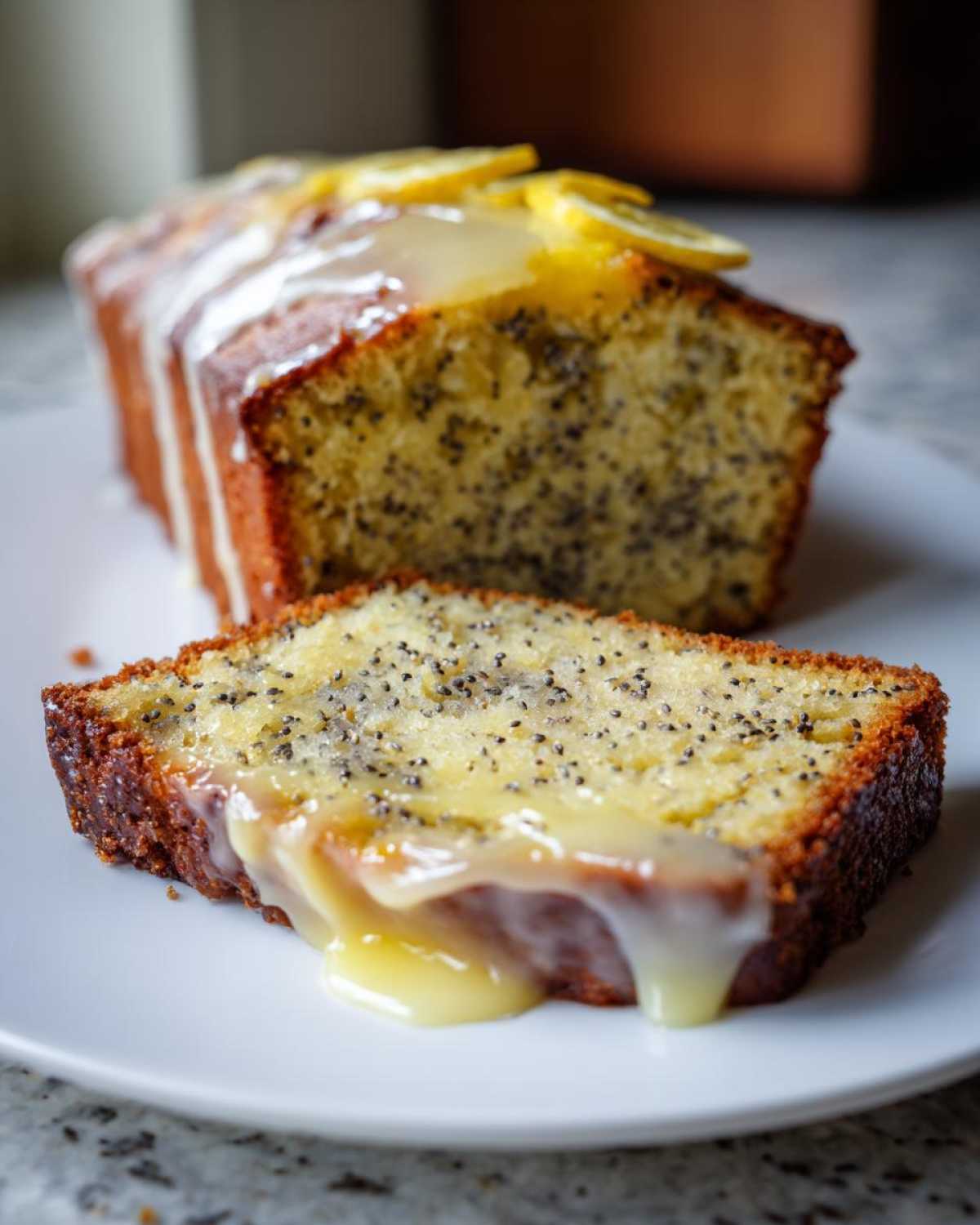
Why This Moist Lemon Poppy Seed Loaf Will Be Your New Favorite (Easy Lemon Poppy Seed Recipe)
Honestly, I’ve tossed out so many sad, dense loaves over the years, so I know exactly what you’re looking for! This recipe isn’t fancy; it just works every single time. If you want that pure, bright lemon flavor without the effort, this is for you.
Here’s why you need to ditch your old file card and grab this recipe:
- It guarantees the Best Moist Loaf Cake texture—seriously, it’s practically spongy!
- The crumb is tender, thanks to the way we treat the butter and sugar. It’s the definition of a Perfect Crumb Lemon Cake.
- The glaze isn’t just sweet; it’s sharp and zesty, cutting through the richness perfectly. This makes it a fantastic Simple Tea Loaf Recipe.
- We use fresh everything, which makes this an incredibly Easy Lemon Poppy Seed Recipe to follow. No weird specialty ingredients!
- It bakes up beautifully golden brown in a standard 9×5 pan—perfect for gifting or just keeping all to yourself.
If you’ve had trouble with loaf cakes disappearing too fast because they dry out the second day, you need to check out how I handle moisture in my zucchini banana bread—that same philosophy applies here to keep this loaf soft.
Gathering Ingredients for the Moist Lemon Poppy Seed Loaf Step-by-Step with Zesty Glaze
Okay, my philosophy on ingredients is simple: fresh equals best, especially when you’re chasing that legendary moist texture. Look, I know sometimes we have to grab things from the back of the pantry, but for this recipe, we really want to focus on the citrus being vibrant. Grab your apron and let’s lay everything out so the actual mixing process flies by!
It’s all about having things ready to go. You’ll see I’ve split this into two manageable groups because nobody wants to be hunting for the sugar when the butter is perfectly creamed. If you are looking for a different type of quick recipe, my cranberry orange muffins use a similar setup!
For the Lemon Poppy Seed Loaf Batter
These are the folks that build the structure and the moisture. Make sure your butter is actually softened—not melted! You know, soft but still cool? That’s crucial for trapping air later.
- 1 3/4 cups all-purpose flour
- 1 1/2 teaspoons baking powder (make sure it’s fresh!)
- 1/2 teaspoon salt
- 2 tablespoons poppy seeds (don’t skimp!)
- 1 cup granulated sugar
- 1/2 cup (that’s one whole stick, kiddos) unsalted butter, softened
- 2 large eggs
- 1/2 cup whole milk
- 1/4 cup fresh lemon juice—and yes, that means squeezing actual lemons!
- 1 tablespoon lemon zest (get all that lovely yellow oil!)
- 1 teaspoon vanilla extract
For the Zesty Lemon Glaze
This is where we get that beautiful, sharp contrast. We are only using powdered sugar here because melted granulated sugar turns grainy and hard, and we want a beautiful drizzle that sets nicely. Remember, we need *fresh* juice for that real zing!
- 1 cup powdered sugar (sifted is even better, but I’m not always perfect!)
- 2 tablespoons fresh lemon juice (you might need a tiny bit more to get the consistency right)
Baking Perfect Loaf Cake: Step by Step Lemon Bread Instructions
This is the main event! Once you get the mixing down for this Step by Step Lemon Bread, you realize how simple it is to create something truly special. I spent way too many weekends tweaking ratios so you don’t have to waste your wonderful citrus zest. We aren’t aiming for a dry slice for tea; we are aiming for a velvety, bright, bakery-style crumb that stays soft for days. If you want to see how I handle moisture in other bakes, take a peek at my gingerbread banana bread!
Preparing the Pan and Dry Mix
First things first: get your oven humming! Preheat it to 350°F (175°C). Grab that 9×5 inch loaf pan—I always give mine a good spray of baking release and then dust it with flour just to be absolutely sure nothing sticks. In a separate bowl, whisk together your dry ingredients: the flour, baking powder, salt, and those beautiful poppy seeds. Whisking them prevents little clumps of leavening agent, which helps everything mix evenly later on.
Mixing the Batter for the Moist Lemon Poppy Seed Loaf
In your big bowl, take that softened butter and the sugar and beat them until they look pale and fluffy—I usually let my mixer run for a full three minutes. Beat in the eggs one at a time, making sure the first one is totally incorporated before adding the next. Now for the liquids: mix your milk, lemon juice, zest, and vanilla together in a small cup. Here’s the secret sauce for that Perfect Crumb Lemon Cake: you alternate, beginning and ending with the dry ingredients. Do three additions of dry, two additions of wet. Mix on low, or even better, finish the last bit by hand with a spatula. Stop mixing the second you don’t see any flour! Seriously, don’t overmix, or that moisture we worked so hard for will disappear! It’s the same care I take when I make my cinnamon swirl banana bread loaf recipe.
Baking and Cooling the Loaf
Pour that gorgeous batter in, smooth the top slightly, and pop it in the oven. It usually takes between 50 and 60 minutes, but you must check it with a wooden skewer inserted right in the middle. If it comes out clean, she’s done! If you see wet streaks, give it five more minutes before checking again. Don’t rush the cooling part, either! Let it sit right in that hot pan for exactly 10 minutes. This lets the crumb firm up just enough so it doesn’t break when you flip it out onto a wire rack to cool completely.
Zesty Lemon Glaze Tutorial: Achieving Bright Lemon Flavor
Now, we move onto the best part—the gorgeous, shiny topping! If the loaf is warm at all when this hits it, you’ll just get sweet lemon soup, and we aren’t making soup here; we are making art! This part of the process is what elevates this from a good snack cake to something you’d happily buy at one of those fancy bakeries.
The goal here is really to amplify that tartness. I always call this my technique for Bright Lemon Glaze Ideas because it’s purely about the fresh citrus cutting through the sweetness. It’s so easy, but people mess up the consistency constantly, so pay attention!
Making and Applying the Zesty Citrus Glazing Techniques
We need that powdered sugar completely smooth, so if your sugar has been sitting around, give it a quick whisk or sieve it first. Just mix the sugar with the 2 tablespoons of fresh lemon juice. I always start with just those two tablespoons because sometimes the juice from one lemon is stronger than another.
You’re looking for a consistency that you can pour, but it should absolutely coat the back of your spoon. If it runs off immediately, add another teaspoon of powdered sugar until it thickens up. If it looks like thick toothpaste, add more lemon juice, just a few drops at a time, until you get that perfect, slow drizzle. You can see how I approach drizzling in my lemon meringue pie topping—it’s the same principle!

Here is a little secret for the application: make sure that loaf is stone cold. I mean totally cooled, or the glaze melts right through. Once it’s prepped, use a spoon to drizzle it back and forth across the top. If you want that extra rustic, drippy look, use the tines of a fork! It breaks the stream perfectly and gives you those jagged, beautiful lines that scream fresh bakery goodness.
Tips for Success with Your Moist Lemon Poppy Seed Loaf Cake
Even with the best recipe laid out, sometimes the temperature of your kitchen or the age of your baking powder can trip you up. I’ve learned these little tricks over years of practice, and they really elevate your baking technique. Consider this your personal Lemon Poppy Seed Baking Guide to avoid the dreaded dry crumb!
If you’ve ever wondered How To Make Moist Sponge Cake but struggled, these four points are the keys to making sure this loaf stays soft past day one:
- Don’t Get Greed with the Zest: I said 1 tablespoon, and I mean it! If you use way too much zest, you introduce bitter oils, which makes you want to compensate by adding more sugar or liquid, throwing off the whole chemistry. Always stop at the measured amount for the best flavor balance.
- Room Temperature Everything (Except the Milk!): Your butter and eggs need to be room temp so they can emulsify correctly and trap air. But I always keep my milk slightly cool, straight from the fridge. When you add the cool milk to the room-temp creamed mixture, it helps stabilize those air bubbles just before you dump in the dry stuff. It’s a small trick, but it makes a huge difference in the final rise.
- Slightly Underbake, Not Overbake: This is the hardest part for me! Seriously, I have to use a timer as a reminder to check early. Once that skewer comes out with just a few moist, clinging crumbs—not wet batter—pull it out! The loaf will continue to bake slightly while it rests in that hot pan. Taking it out a minute early keeps that final moisture locked in.
- The Loaf Pan Matters: If you use metal pans, they conduct heat faster than glass or silicone. If you find your bottoms are setting too fast, try wrapping the outside of your metal loaf pan with a little strip of damp parchment paper, secured with twine, before you even grease it. This acts like a little thermal blanket, slowing down the edges so the center sets evenly.
These techniques really ensure you get that soft, tender crumb that makes you instantly want to go back for another slice. It’s the same level of detail I use when developing other quick breads, like the ones in my cranberry orange muffins recipe!
Ingredient Notes and Substitutions for This Simple Tea Loaf Recipe
I always get so many questions about swapping things out, especially when people are trying to make recipes work with what they have on hand. For this Simple Tea Loaf Recipe, I really want to stress that the lemon juice needs to be fresh, like *really* fresh. Extract just doesn’t carry that bright, sunny flavor we are aiming for in this loaf!
Now, let’s talk about the milk. The recipe calls for whole milk, which gives a nice richness, but I know some of you are dairy-free or just prefer a little extra tang. If you want to bump up the moisture factor even more—and I mean *really* guarantee that airy, soft interior—you can absolutely try swapping that milk for sour cream.
It’s a super easy switch, and honestly, it makes the crumb unbelievable. Just use the same 1/2 cup measurement! I tested it last time I made a batch for my neighbor because she loves a slight tanginess in her baking. I always think about these swaps when I’m working on something like my Irish soda bread muffins—the acid in the buttermilk or sour cream reacts differently with the leavening agents, giving you a slightly finer texture.
The main thing to remember is with substitutions? Make sure the flavor profile still lets that beautiful lemon shine through. If you start loading it up with too many powerful competing flavors, you lose the essence of what makes this loaf special!
Storage & Reheating Instructions for Your Homemade Poppy Seed Cake
The best part about this Homemade Poppy Seed Cake is that it stays incredibly fresh for days, which is rare for a lemon loaf! If you have leftovers (good luck!), wrap the whole loaf tightly in plastic wrap once it’s completely cool—glaze and all. It will stay perfectly moist on the counter at room temperature for about three days.
If you need it to last longer, pop it in the freezer! I slice it first, wrap individual slices in plastic wrap, and then foil. When you want a slice, just let it thaw on the counter for an hour. If it feels like it lost a tiny bit of its zing, microwave a slice for about 10 seconds; it wakes up the moisture right away. You can look at my notes on freezing gingerbread banana bread for extra tips on preventing freezer burn!
Serving Suggestions for the Bakery Style Lemon Loaf
Oh, the hardest part is waiting for the glaze to set, but once it does, you are ready for the payoff! This Bakery Style Lemon Loaf is just perfect on its own, but pairing it correctly really makes it feel like a special treat rather than just breakfast. It’s so bright and clean tasting; that’s why we want partners that complement it, not overpower it.
When I serve this to company, I usually keep things simple. It needs a hot drink, of course! It is just amazing with a simple, clean cup of black coffee—the bitterness contrasts so nicely with the sweet glaze. It also sings alongside a delicate English Breakfast tea. I find that heavily flavored lattes can sometimes compete with the lemon, so I try to keep the beverage light.
If you’re serving it as a dessert, though, you can get a little fancier! A small dollop of tart Greek yogurt or even lightly sweetened whipped cream is fantastic. Don’t go for heavy buttercream or anything rich; we want to honor that zesty punch. If you’ve ever tried my pumpkin spice latte oatmeal bake, you know I love a great pairing; for this loaf, airy and slightly tangy is the way to go!
Frequently Asked Questions About Making the Moist Lemon Poppy Seed Loaf
I totally get why you have questions! Loaf cakes can be tricky, especially when you are trying to achieve that perfect balance of texture and flavor intensity. It’s easy to end up with something either gummy or crumbly. So, let’s clear up any last minute worries before you dive into the recipe!
Why is my lemon poppy seed loaf dry?
This is the number one reason people quit baking loaf cakes, but I promise, it’s usually down to one of two things! Firstly, you mixed too much. Remember what I said? Stop when you see the last streak of flour disappear. Overmixing develops gluten, and gluten is great for chewy bread, but terrible for a tender cake. Secondly, you have to use fresh juice and zest. Those dried-out little bottles of extract just don’t carry the same moisture or punch as real citrus. If you’ve had failures before, check out my notes on moisture retention in zucchini banana bread; those principles work here too!
Can I use lemon extract instead of fresh juice/zest?
Oh, you *can*, but I strongly advise against it if your goal is that brilliant, zesty flavor! Lemon extract is powerful and synthetic tasting. It’s basically just pure lemon oil suspended in alcohol. You’ll get *a* lemon flavor, sure, but it won’t have that bright, clean, sunny characteristic that comes from zesting the actual fruit. Fresh zest contains the oils that burst with scent and flavor when baked. Stick to the fresh stuff, trust me!
How do I know when the loaf is fully baked?
The skewer test is your best friend, but don’t stop there! When you poke the center, you want the skewer to come out clean, or maybe with just one or two tiny, moist crumbs clinging to it. If it comes out wet, it needs more time! Visually, look for the edges of the loaf to start pulling just slightly away from the sides of the pan. If you wait until the entire surface looks totally dry, you’ve waited too long, and moisture is already evaporating!
Share Your Results and Rate This Recipe
I am so excited for you to pull this beautiful, bright loaf out of the oven! It truly is the easiest way to get that stunning bakery feel right in your own kitchen.
Once you’ve let that zesty glaze set and you’ve taken that first bite—tell me what you think! Did it stay moist for days? Did the glaze give you the perfect zing? Please leave a star rating below and let me know how your experience went! I love seeing your bakes, so don’t be shy about sharing your photos!
Share Your Results and Rate This Recipe
I am so excited for you to pull this beautiful, bright loaf out of the oven! It truly is the easiest way to get that stunning bakery feel right in your own kitchen.
Once you’ve let that zesty glaze set and you’ve taken that first bite—tell me what you think! Did it stay moist for days? Did the glaze give you the perfect zing? Please leave a star rating below and let me know how your experience went! I love seeing your bakes, so don’t be shy about sharing your photos!
Print
Moist Lemon Poppy Seed Loaf Step-by-Step with Zesty Glaze
- Total Time: 70 min
- Yield: 1 loaf (about 10 slices) 1x
- Diet: Vegetarian
Description
Follow these detailed steps to bake a very moist lemon poppy seed loaf cake topped with a bright, zesty lemon glaze.
Ingredients
- 1 3/4 cups all-purpose flour
- 1 1/2 teaspoons baking powder
- 1/2 teaspoon salt
- 2 tablespoons poppy seeds
- 1 cup granulated sugar
- 1/2 cup (1 stick) unsalted butter, softened
- 2 large eggs
- 1/2 cup whole milk
- 1/4 cup fresh lemon juice
- 1 tablespoon lemon zest
- 1 teaspoon vanilla extract
- For the Glaze: 1 cup powdered sugar
- For the Glaze: 2 tablespoons fresh lemon juice
Instructions
- Preheat your oven to 350°F (175°C). Grease and flour a standard 9×5 inch loaf pan.
- In a medium bowl, whisk together the flour, baking powder, salt, and poppy seeds. Set this dry mixture aside.
- In a large bowl, cream the softened butter and sugar together with an electric mixer until light and fluffy, about 3 minutes.
- Beat in the eggs one at a time, mixing well after each addition.
- In a small bowl, whisk together the milk, lemon juice, lemon zest, and vanilla extract.
- Gradually add the dry ingredients to the wet ingredients, alternating with the milk mixture, beginning and ending with the dry ingredients. Mix only until just combined; do not overmix.
- Pour the batter evenly into the prepared loaf pan.
- Bake for 50 to 60 minutes, or until a wooden skewer inserted into the center comes out clean.
- Let the loaf cool in the pan for 10 minutes before inverting it onto a wire rack to cool completely.
- While the loaf cools, prepare the glaze: Whisk the powdered sugar and 2 tablespoons of lemon juice together until smooth. Add more powdered sugar or lemon juice, one teaspoon at a time, to reach a thick but pourable consistency.
- Once the loaf is completely cool, drizzle the zesty glaze evenly over the top. Allow the glaze to set before slicing and serving.
Notes
- For extra moisture, you can substitute sour cream for the milk in the batter.
- Use fresh lemon zest and juice for the brightest flavor in both the loaf and the glaze.
- To prevent the top from browning too quickly, loosely tent the loaf with aluminum foil halfway through baking.
- Prep Time: 15 min
- Cook Time: 55 min
- Category: Dessert
- Method: Baking
- Cuisine: American
Nutrition
- Serving Size: 1 slice
- Calories: 280
- Sugar: 32g
- Sodium: 180mg
- Fat: 13g
- Saturated Fat: 7g
- Unsaturated Fat: 6g
- Trans Fat: 0.3g
- Carbohydrates: 39g
- Fiber: 1g
- Protein: 4g
- Cholesterol: 55mg