
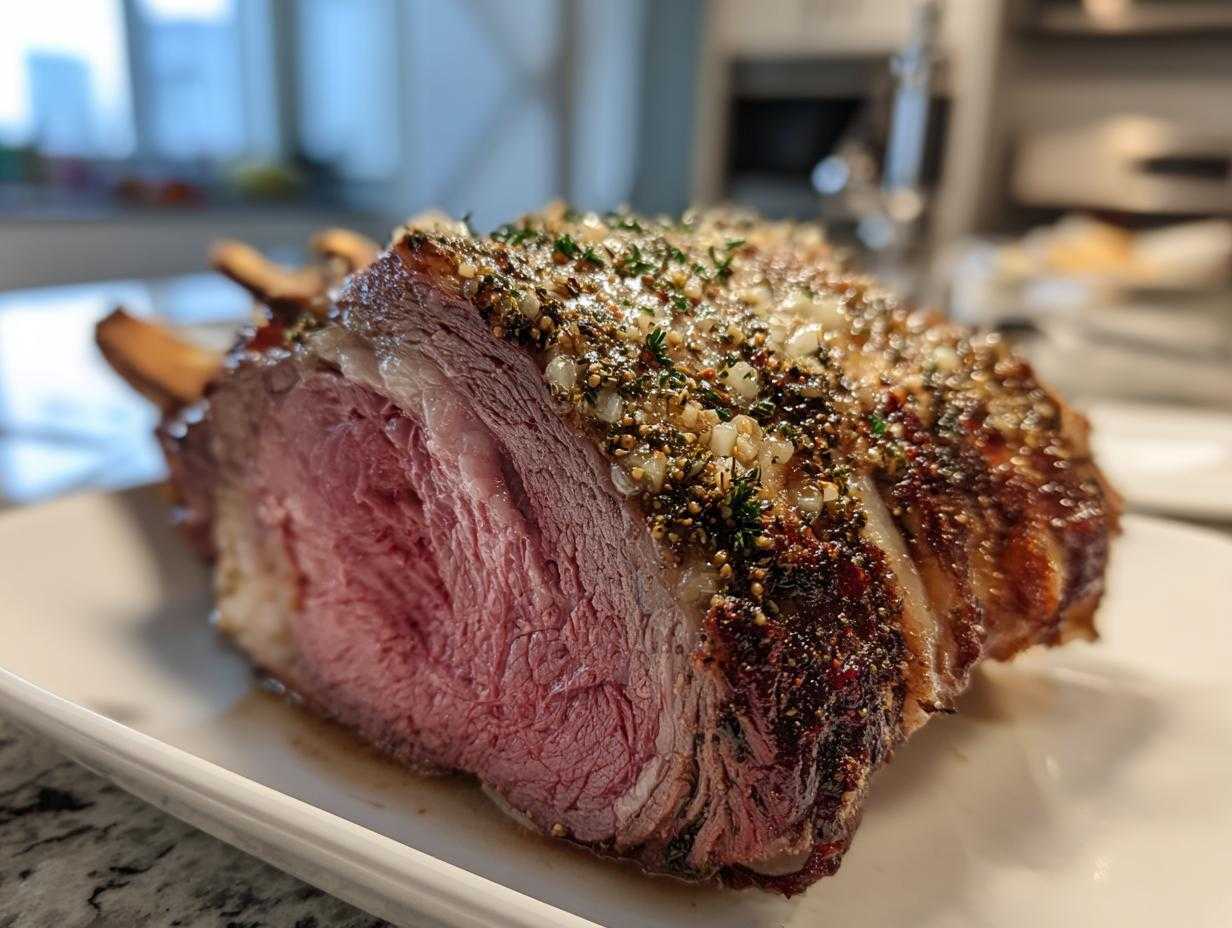
You know that feeling when the house smells incredible, and everyone is whispering about the main event? That’s the magic of a perfectly cooked prime rib, or as I call it, the ultimate holiday showstopper. Forget all those complicated reverse-sear methods or worrying about undercooking; I’ve got the tried-and-true technique that guarantees success every single time, even for a massive five-rib roast. This Foolproof Juicy Oven-Roasted Prime Rib Roast with Garlic Herb Crust is the centerpiece you’ve been looking for—it’s easy on me and absolutely delivers on flavor and tenderness for my biggest family gatherings!
Why This Oven-Roasted rib roast Recipe is Your New Holiday Main Course
Trust me, this isn’t just another beef recipe; it’s your cheat code for holiday success! I’ve relied on this approach for years because it takes the guesswork out of what feels like the most intimidating dish on the table. When you break it down, the benefits speak for themselves. This is why it’s quickly become our go-to Christmas dinner main course.
- Guaranteed Medium-Rare: The two-temperature cooking method locks in juices perfectly every time. No more grey bands!
- The Crust is Everything: That garlic and herb rub transforms the exterior into a flavor-packed shell.
- It’s Beginner Friendly: Despite looking fancy, this is secretly one of the easiest *special occasion beef* dishes you can tackle.
- Perfect for Crowds: A solid standing rib roast serves plenty and looks absolutely stunning as the beef centerpiece.
Essential Ingredients for a Perfect rib roast
Okay, let’s talk about what goes into this gorgeous piece of meat. For a spectacular *rib roast*, you have to start with quality. I always tell people to find a nice, well-marbled roast, preferably bone-in, because those bones are just flavor magnets! Don’t worry about the actual ‘Prime’ grade unless you’re splurging; a high-quality Choice cut prepared correctly will still be the most tender beef you’ve ever made. The rub is where we build serious flavor that sticks through the entire roasting process, leading to that amazing crust. Check out my secret sauce for leftovers later, though this recipe stands strong on its own with a side of creamy horseradish sauce!
- One (5-7 pound) bone-in rib roast (aim for about 3 ribs if you can).
- 3 tablespoons kosher salt – that’s necessary for drawing out moisture for the crust!
- 2 tablespoons black pepper, freshly cracked is always better, obviously.
- 1 tablespoon dried thyme.
- 1 tablespoon dried rosemary.
- 6 cloves garlic, that’s right, minced finely. Don’t skimp here!
- 1/4 cup olive oil – good quality stuff, it helps everything stick.
- 2 tablespoons Dijon mustard – this acts as our binder and adds a little tang.
Step-by-Step Guide: How to Cook rib roast to Medium Rare Perfection
This is where the magic happens, my friends! I know staring down a large cut of beef can be intimidating, but I promise, if you follow these steps and treat your meat thermometer like gold, you’ll get the *best rib roast* possible. This two-part temperature method is how we get that incredible crust and that perfectly pink, juicy interior without any fuss. It’s all part of my simple step by step roast guide.
Preparing the rib roast and Herb Rub
First things first: take that big beautiful *rib roast* out of the cold fridge at least two or three hours before you plan to cook it. Seriously, don’t skip this step! Letting it come up to room temperature means it cooks much more evenly inside. While it’s warming up, whip up the rub. Mash that minced garlic together with the olive oil, Dijon mustard, salt, pepper, rosemary, and thyme. You’re basically making a thick, aromatic paste. Now, once the roast is tempered, you absolutely have to pat it dry with paper towels. Moisture is the enemy of crust, so make sure that exterior is bone dry before you start rubbing!
The High-Heat Sear and Temperature Reduction for your rib roast
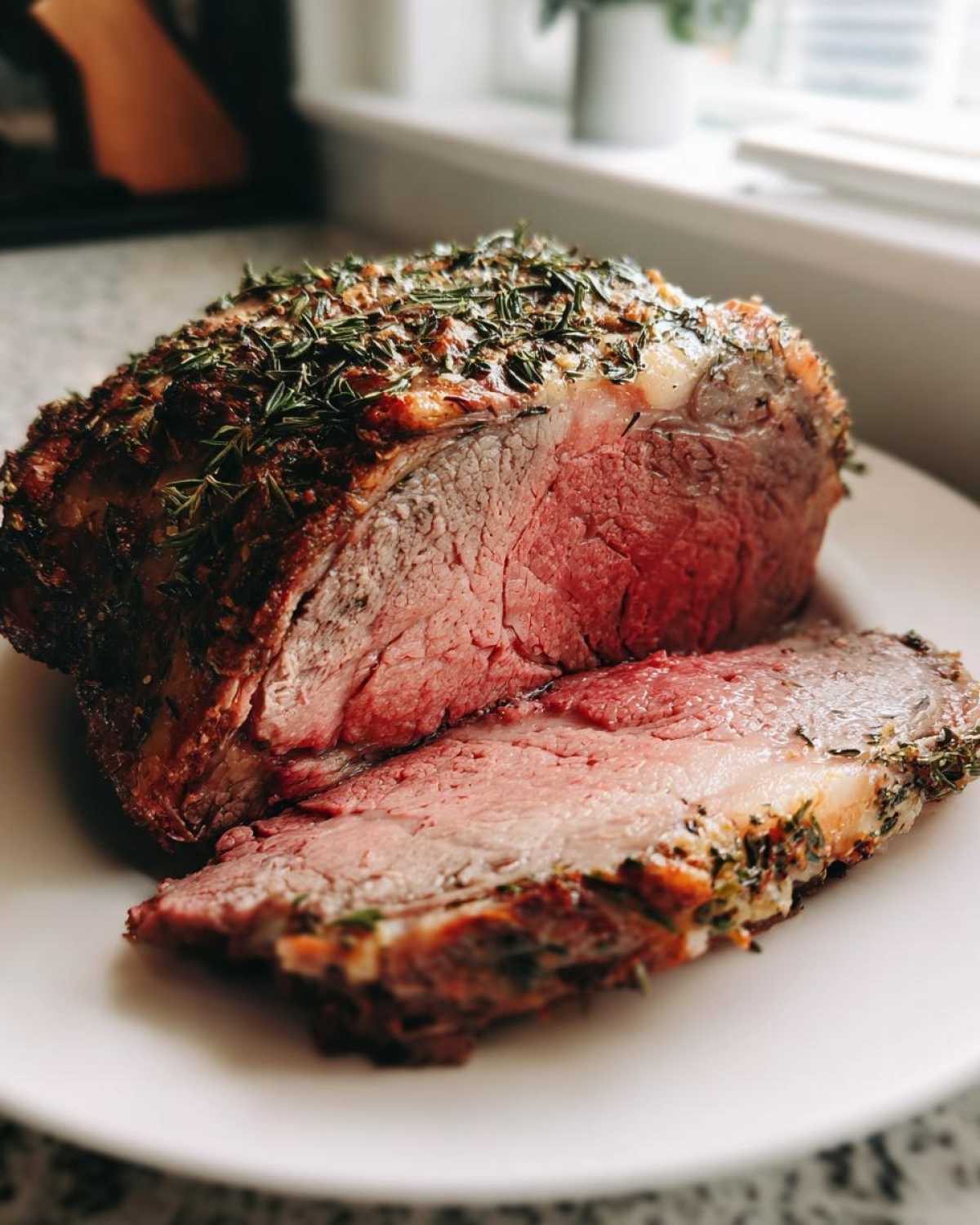
Get that oven screaming hot—we’re talking 450 degrees Fahrenheit! Place the seasoned roast fat-side up on a rack in your roasting pan. Pop it in for exactly 15 minutes. That intense blast of heat is what builds that gorgeous, savory crust we talked about. After those 15 minutes are up, you need to resist the urge to peek! Switch the oven down to 325 degrees Fahrenheit—no opening the door to let that heat escape. Keep roasting until your meat thermometer slides into the thickest part (make sure you’re not touching bone!) and reads 125 degrees Fahrenheit. For my five-pounder, that usually takes around an hour and a half total, but remember, it’s about 13 to 15 minutes per pound for a gorgeous medium rare roast beef.
Achieving Medium Rare Doneness and Resting the rib roast
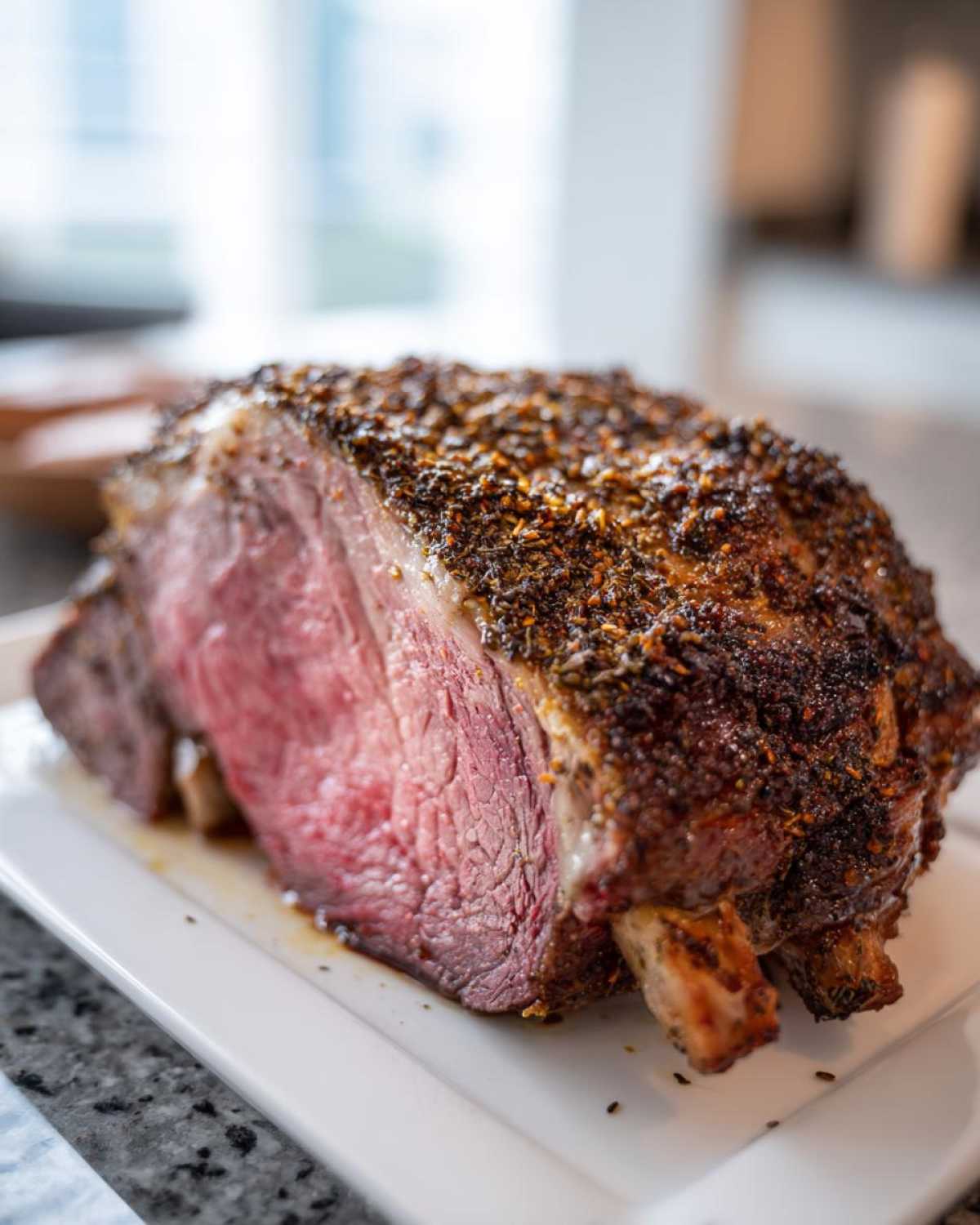
Once you hit 125°F, pull that roast out! This is the most important part of achieving perfect roast beef doneness: R-E-S-T. Tent it loosely with foil—I mean really loosely, letting the steam escape—and walk away for a full 20 minutes. I know, it’s torture when you’re starving, but during this rest, the temperature keeps climbing, usually hitting 130°F to 135°F naturally. This resting period lets all those amazing juices settle back through the meat fibers. If you skip this, they run out onto your cutting board, and you end up with a drier roast. After the rest, just slice between those beautiful bones and prepare for applause!
Tips for the Juiciest rib roast Possible
I feel like I should give you a little inside scoop here because while the initial recipe is bulletproof, these extra little things are what take this *rib roast* from great to legendary. When I first started making this for Christmas dinners years ago, I learned quickly that the details matter just as much as the main temperature setting. One year, I got distracted by an argument over board games and cut the roast after only 10 minutes of resting—wow, was that a mistake! The plate was swimming in juice, and the meat, while tasty, was definitely not the tender beef roast I wanted.
Never again! Resting is non-negotiable.
Here are a few other things I swear by that really help lock in that moisture:
- A Word on The Rack: If your roasting pan didn’t come with a good sturdy rack, go buy one. You absolutely need air circulation all the way around the roast. If you don’t have one, you can make a quick substitute by twisting two or three long metal skewers horizontally across the pan, resting the roast on top of them. This keeps the bottom from steaming instead of roasting.
- The Fat Cap Up Strategy: Always put that roast fat-side-up initially. That thick layer of fat slowly melts down during the roasting process, basting the meat underneath and keeping everything incredibly moist. You want that fat to render slowly, not just slide right off!
- When in Doubt, Add Au Jus: If you accidentally overcook your roast by a degree or two—it happens!—don’t panic. When you carve your post-rest slices, use the remnants in the pan (after straining the drippings for gravy, of course) as a super-flavorful base. Give the slices a very quick dip in that warm, rich liquid before serving to reintroduce moisture. It’s a lifesaver!
Following these little tricks ensures that even if you’re carving for a huge group, everyone gets that perfect, succulent slice.
Serving Suggestions for Your Herb Crusted rib roast
So, you’ve pulled off the most glorious *rib roast* imaginable! Now what? You can’t just serve this magnificent *beef centerpiece* naked on a platter, can you? Absolutely not! The key to a successful holiday meal is rounding out that rich, savory flavor profile with sides that sing along. You want comforting, classic complements that soak up all those amazing pan drippings.
For real show-stopping tradition, you absolutely need creamy mashed potatoes. I’m convinced nothing compares to my recipe for buttery garlic mashed potatoes—they are the perfect vehicle for holding onto that pan juice! If you’re feeling extra fancy, Yorkshire puddings are a must, though they take a bit more precision. Otherwise, a simple side of garlicky roasted asparagus or some creamy spinach cuts through the richness beautifully. Keep the veggies green and simple to let that herb-crusted beef shine!
Storage and Reheating Instructions for Leftover rib roast
Oh man, leftovers! If you managed to have any, you’re in for a treat. That incredible *rib roast* tastes almost as good the next day. But you can’t just throw a half-eaten roast in the fridge and expect magic the next night, right? It needs a little TLC.
The most important thing is how you slice it before you store it. If you cut up the whole thing right away, it tends to dry out faster than if you leave it whole. However, if you’re aiming for quick meals later in the week, I usually separate the bone section (if you have one) and wrap the main muscle tightly. For me, the secret to handling leftovers is slicing them as thin as possible—think deli-counter thin—before they even go into the storage container.
Storing Slices vs. Large Chunks
If you sliced the whole thing the night you served it, wrap those thin slices tightly in plastic wrap, and then put them in an airtight container or heavy-duty zip-top bag. You want to minimize air exposure so they don’t turn grey or dry out in the fridge. They’re good for about three to four days this way. If you have a huge, uncarved chunk left over, that will last closer to five days safely in the fridge, but you’ll need to carve it right before reheating.
The Best Way to Reheat Leftover rib roast
Never, ever microwave a thick slab of leftover prime rib—it’s basically guaranteed to turn into beef jerky! The key here is gentle, moist heat. We’re not trying to cook it more; we’re just warming it up.
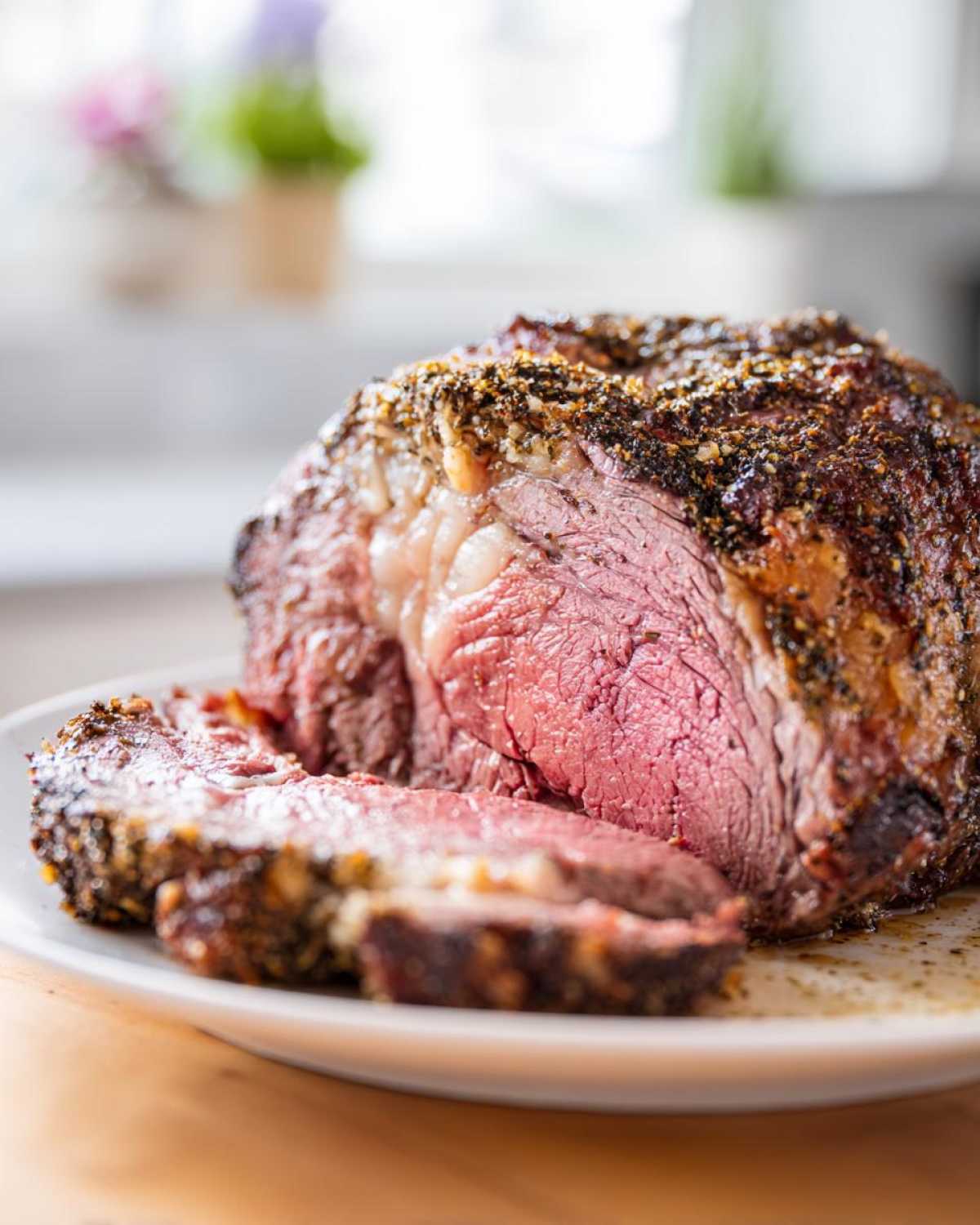
My absolute favorite technique involves taking those thin slices and gently warming them in some flavorful liquid on the stovetop. You can use leftover au jus, beef broth, or even just some well-seasoned water. Bring the liquid to a bare simmer—not a boil!—and just dip the slices in until they are heated through, maybe 30 seconds per side. They warm up so fast, and the moisture keeps everything luscious.
If you have a lot of slices, you can place them in an oven-safe dish, pour just a little broth over the bottom (don’t submerge them!), cover it tightly with foil, and warm it in a 300-degree oven until warm. It’s so comforting, and it makes amazing leftovers for sandwiches or even to chop up later for something like my holiday leftover minestrone soup later in the week!
Frequently Asked Questions About Cooking a rib roast
You’ve got the recipe nailed down, but sometimes you just need a quick answer before you commit to that gigantic piece of beef! I totally get it. When I first started tackling a big *standing rib roast*, I had a million questions running through my head. Here are some of the things folks ask me most often about achieving that perfect *oven roasted beef*.
What is the difference between a rib roast and prime rib?
Oh, this is a classic question! Technically speaking, ‘Prime Rib’ refers to the grade of beef—it has to be USDA Prime quality, which is the top tier with the best marbling. However, in general cooking talk, everyone—and I mean everyone—uses ‘Prime Rib’ and ‘*rib roast*’ interchangeably to mean that glorious standing roast cut from the rib section. So when you’re shopping and you ask for a three-rib roast, if they hand you a beautiful cut, you’ve got what you need for this recipe, regardless of what they call it!
Can I cook my rib roast using a reverse sear method?
You certainly can! The reverse sear method—where you cook it low and slow the whole way and then sear high at the end—is a super popular, reliable way to get edge-to-edge medium-rare results. It’s fantastic, especially if you have a very large roast or you’re worried about a crust. But look, for folks who are newer to cooking a giant *rib roast* or who have less time, I find the high-heat blast followed by a steady, lower temperature (the method I showed you!) is just a bit simpler to manage timing-wise in a busy kitchen. This recipe is designed to deliver that incredibly juicy roast with minimal stress, so stick with the high-low for your first time!
How do I calculate the cooking time for a larger rib roast?
This is where you really need that meat thermometer, but for a general time estimate, the rule of thumb for a perfect *medium rare roast beef* (targeting 125°F before resting) is crucial. For standard cuts, you are looking at about 13 to 15 minutes per pound at that lower 325°F temperature. If you have a much bigger roast, say 10 pounds, you have to factor in that it takes longer for the heat to penetrate the center, so while the time per pound might drop slightly, your total cooking time in the oven will be significantly longer. For help getting the math right for those extra-large holiday joints, check out my guide on the easy prime rib method which includes charts!
Estimated Nutritional Data for this rib roast
Now, I know when you’re celebrating with a massive roast like this, you aren’t usually counting every single macro, but it is good to have a ballpark idea of what you’re serving up! This is such a rich meal, but because we are focusing on the meat itself and not smothering it in heavy gravy (yet!), it stacks up surprisingly well as a leaner protein option in the grand scheme of things.
Just remember, these numbers are based on a serving size of about 6 ounces of cooked meat from the recipe as written, using all the herbs and the olive oil rub. Values can change wildly depending on how much fat renders, if you trim your roast differently, or what kind of sides you pile on your plate later!
- Serving Size: 6 ounces cooked
- Calories: 450
- Protein: 40 grams
- Fat: 30 grams
- Saturated Fat: 12 grams
- Carbohydrates & Sugar: 0 grams (That’s right! Totally carb-free!)
- Sodium: Around 450mg (This depends heavily on how much salt you used in your seasoning blend!)
See? A big serving of protein that fuels you up for whatever holiday fun comes next! It’s a *special occasion beef* winner that doesn’t feel overly heavy, especially if you pair it with lighter sides.
Share Your Experience Making This rib roast
Phew! You’ve gone through all the steps, you’ve wrestled that massive *rib roast* into the oven, and the house smells completely divine! Now that you’ve successfully carved that beautiful, rosy meat, I would absolutely love to hear how it went for you. Did the garlic herb crust crackle just right? Were your dinner guests suitably impressed by your new favorite *holiday roast recipe*?
Please, don’t be shy! If you made this recipe, hop down to the comments section below and tell me all about it. Did you stick to the 125°F pull temperature, or did you go slightly rarer for your crowd? Were there any little tweaks you added to the herb blend based on what you had in the pantry? Every time I see a comment pop up saying someone nailed their first prime rib, I just beam!
If you took a picture of your stunning *beef centerpiece*—and I know you did!—I’d be thrilled if you shared it with me over on social media. Tag me in your posts so I can see your perfect slices! If you have any lingering questions before you tackle this next time, feel free to send them my way via the contact page, too. Happy roasting, everyone!
Print
Foolproof Juicy Oven-Roasted Prime Rib Roast with Garlic Herb Crust
- Total Time: 2 hr 50 min
- Yield: 6-8 servings 1x
- Diet: Low Fat
Description
Follow this guide to cook a tender, juicy standing rib roast with a flavorful garlic and herb crust using a simple oven method.
Ingredients
- 1 (5-7 pound) bone-in rib roast (about 3 ribs)
- 3 tablespoons kosher salt
- 2 tablespoons black pepper
- 1 tablespoon dried thyme
- 1 tablespoon dried rosemary
- 6 cloves garlic, minced
- 1/4 cup olive oil
- 2 tablespoons Dijon mustard
Instructions
- Remove the rib roast from the refrigerator 2 to 3 hours before cooking to allow it to come to room temperature.
- Preheat your oven to 450 degrees Fahrenheit.
- In a small bowl, combine the minced garlic, olive oil, Dijon mustard, salt, pepper, thyme, and rosemary to make the herb rub.
- Pat the entire surface of the roast dry with paper towels.
- Rub the herb mixture evenly over the entire surface of the roast.
- Place the roast, fat side up, in a roasting pan fitted with a rack.
- Roast at 450 degrees Fahrenheit for 15 minutes.
- Reduce the oven temperature to 325 degrees Fahrenheit. Do not open the oven door.
- Continue roasting until the internal temperature reaches 125 degrees Fahrenheit for medium-rare. This usually takes about 13 to 15 minutes per pound.
- Remove the roast from the oven when it reaches 125 degrees Fahrenheit.
- Tent the roast loosely with aluminum foil and let it rest for 20 minutes before carving. The internal temperature will rise to about 130-135 degrees Fahrenheit during resting.
- Carve the roast between the bones and serve immediately.
Notes
- Use a reliable meat thermometer inserted into the thickest part of the roast, avoiding bone contact, for accurate doneness readings.
- For easier carving, ask your butcher to remove the bones and tie them back onto the roast with butcher’s twine.
- Resting the roast is essential; this allows the juices to redistribute, resulting in a more tender and moist final product.
- Prep Time: 20 min
- Cook Time: 2 hr 30 min
- Category: Main Course
- Method: Oven Roasting
- Cuisine: American
Nutrition
- Serving Size: 6 ounces cooked
- Calories: 450
- Sugar: 0
- Sodium: 450
- Fat: 30
- Saturated Fat: 12
- Unsaturated Fat: 18
- Trans Fat: 0
- Carbohydrates: 0
- Fiber: 0
- Protein: 40
- Cholesterol: 130